
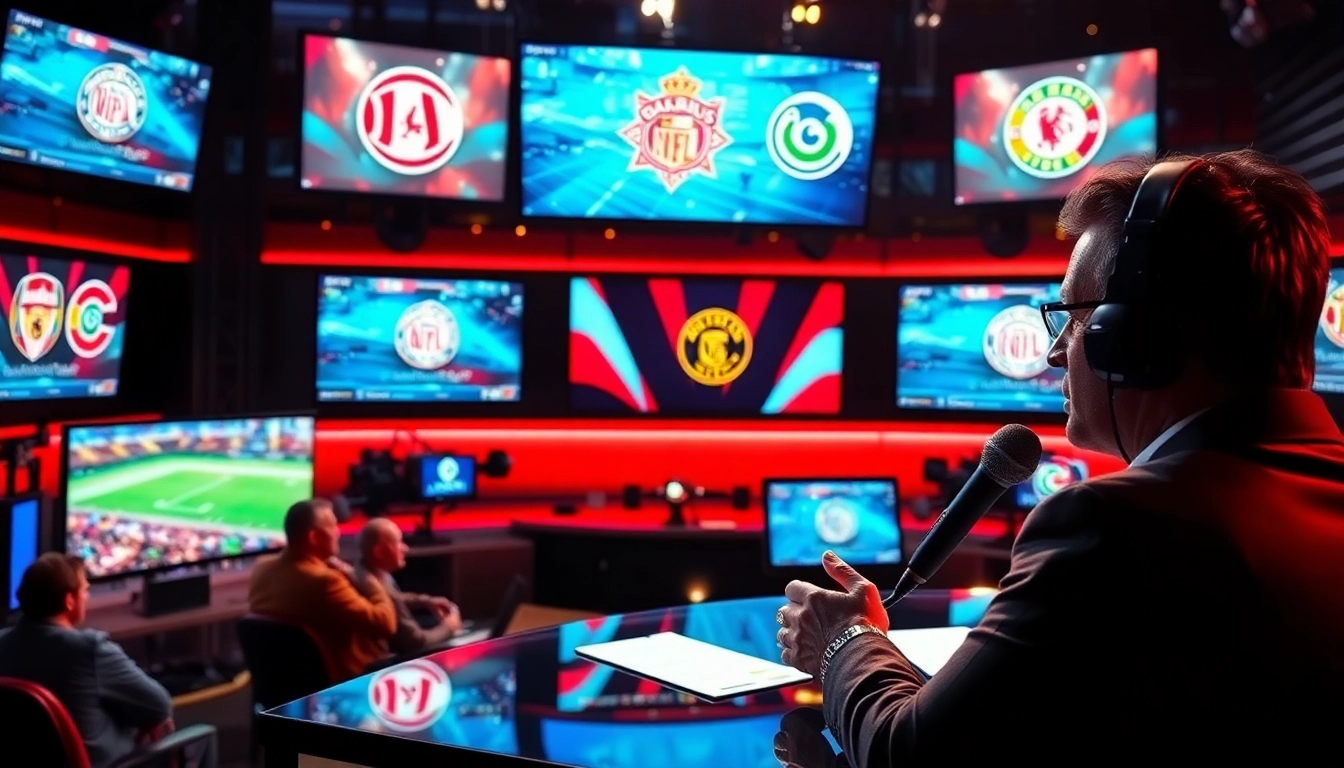
Understanding Sports Broadcasting
Defining Sports Broadcasting
Sports broadcasting refers to the live transmission of sporting events through various media platforms, including television, radio, and online streaming services. This form of communication serves not only to entertain but also to inform audiences about the events, allowing them to engage with their favorite sports and teams remotely. Its significance in the global entertainment landscape is monumental, as it bridges the gap between athletes and fans, providing immediate access and insight into sporting activities. For extensive information on the current trends and tactics in Sports Broadcasting, refer to Sports Broadcasting.
Historical Evolution of Sports Broadcasting
The journey of sports broadcasting began in the early 20th century when radio became the first medium to convey live sports events. The first significant broadcast occurred in 1921 when a boxing match was aired, capturing the attention of sports fans. Television then revolutionized sports broadcasting in the mid-20th century, with events being showcased in a way that allowed for visual engagement. The introduction of cable and satellite television further expanded viewership, as networks began to compete for broadcasting rights to major sports leagues. In recent years, the emergence of digital platforms has enabled on-demand streaming, changing how audiences consume sports content, making it more personalized and accessible than ever before.
Key Stakeholders in Sports Broadcasting
Sports broadcasting involves a myriad of stakeholders who contribute to the ecosystem. These include:
- Sports Organizations: Governing bodies that hold the rights to leagues and events.
- Broadcasters: Networks and platforms that transmit events to audiences.
- Sponsors: Companies that advertise during broadcasts, providing financial support.
- Fans: Viewers who engage with the content and drive ratings.
- Production Teams: Professionals responsible for the technical aspects of broadcasting, including cameramen, directors, and editors.
Understanding the interrelationships among these stakeholders is crucial for the evolution and success of sports broadcasting.
Technology Transforming Sports Broadcasting
Impact of Streaming Services on Sports Broadcasting
Streaming services have fundamentally changed the landscape of sports broadcasting by offering flexibility and various viewing options. Unlike traditional broadcasting, streaming allows fans to watch live events on multiple devices, from smartphones to smart TVs. Services like live game streaming, subscription packages, and pay-per-view options have driven increased engagement, appealing particularly to younger audiences who prefer on-demand content. The impact is evident in metrics such as increased viewership and emergent revenue streams, shifting financial models in the industry towards integration with technology.
Virtual Reality and Enhanced Viewing Experiences
Virtual reality (VR) has emerged as a groundbreaking technology transforming the viewing experience. By immersing fans in interactive environments, they can experience games from different angles, akin to being on the sidelines. Companies are investing in VR technology to enhance engagement, offering fans unique experiences such as virtual arenas and exclusive player insights. As technology continues to evolve, it is likely that VR's role in sports broadcasting will expand, offering unprecedented levels of personalization and interactive experiences.
Data Analytics in Sports Broadcasting
Data analytics is playing an increasingly vital role in sports broadcasting, providing insights that enhance viewer engagement and operational efficiency. Broadcasters use analytics to tailor content based on viewer preferences, optimizing advertising strategies, and enhancing production quality. This data-driven approach allows for more targeted programming and real-time analytics during events, enabling broadcasters to create engaging content that resonates with their audience. By effectively harnessing data, sports media companies can improve user experiences and foster deeper connections with fans.
Legal and Regulatory Aspects of Sports Broadcasting
Rights and Licensing in Sports Broadcasting
The rights and licensing landscape in sports broadcasting is complex and competitive. Networks must negotiate licenses to broadcast specific events, often resulting in lucrative agreements for the right to air major league matches, tournaments, and championships. These rights can be divided into different categories, such as regional, national, and international, each with distinct contracts and negotiations. As the market for sports broadcasting becomes more competitive, understanding the intricacies of these agreements is crucial for all stakeholders in the broadcasting realm.
Compliance and Regulations
Compliance with regulations is another critical aspect affecting sports broadcasting. Broadcasters must adhere to varying national and international laws that govern broadcasting rights, advertising, and content delivery. Aspects such as age restrictions for certain content, advertising standards, and copyright laws must be considered. Non-compliance can lead to substantial fines and damage to reputation, making compliance an essential focus for organizations operating within this space.
Intellectual Property Rights in Broadcasting
Intellectual property rights protect the creative elements associated with sports broadcasting. Content creators, broadcasters, and sports organizations must navigate these rights to avoid infringements. Rights to logos, team names, and footage require careful management to ensure legal protection and the ability to monetize content without legal repercussions. Addressing these concerns is fundamental for sustaining long-term profitability and trust within the sports broadcasting ecosystem.
The Future of Sports Broadcasting
Upcoming Trends in Sports Broadcasting
The future of sports broadcasting is marked by emerging trends that promise to redefine viewer engagement. Personalization through artificial intelligence (AI) will help tailor content to individual viewer preferences, providing customized programming and recommendations. Additionally, advancements in 5G technology will further enhance streaming services, offering high-definition quality and minimal lag, even during peak viewing times. The integration of social media platforms within broadcast strategies will also grow, creating more interactive viewing experiences.
Audience Engagement Strategies
Engaging audiences effectively is vital in the competitive landscape of sports broadcasting. Strategies such as interactive polling during broadcasts, live chats, and social media integration create opportunities for viewer participation. By fostering a sense of community and involvement, broadcasters can cultivate loyalty and encourage continued viewership. Furthermore, loyalty programs and exclusive content access can also incentivize fan engagement and retention.
Predictions for the Next Decade in Sports Broadcasting
Looking ahead, the next decade in sports broadcasting is likely to be dominated by technological advancements and evolving viewer preferences. The integration of augmented reality (AR) will enhance how fans experience games, offering additional data and statistics in real-time. Sports broadcasting will also increasingly focus on globalization, bringing international sports leagues to wider audiences. As digital platforms expand, traditional broadcasting channels may need to adapt, blurring the lines between media consumption formats.
Global Perspectives on Sports Broadcasting
Regional Differences in Sports Broadcasting
Sports broadcasting varies dramatically across regions, influenced by local sports culture, technological advancements, and regulatory frameworks. In the United States, major leagues enjoy extensive coverage and multimillion-dollar broadcasting contracts. In contrast, countries with less commercialized sports leagues face challenges in monetization and audience engagement. Regional broadcasters also tailor content based on cultural preferences, highlighting the importance of localized strategies in successfully reaching diverse audiences.
Case Studies of Popular Sports Broadcasts Worldwide
A closer examination of popular sports broadcasts across the globe provides valuable insights into effective strategies. For instance, the English Premier League employs a global broadcasting strategy to enhance reach and fan passion, generating substantial revenue through expansive licensing agreements. Alternatively, events like the Olympics leverage international cooperation in broadcasting rights, allowing for extensive coverage and viewership across multiple continents. These cases reveal operational frameworks that can inspire other sports leagues and broadcasters worldwide.
Lessons Learned from Global Broadcasting Practices
Global broadcasting practices reveal several best practices that can be implemented to enhance viewer engagement. Successful broadcasters often embrace technology to enhance storytelling, using data analytics to identify and cater to viewer preferences. Additionally, fostering partnerships with social media networks has proven beneficial in increasing viewer interaction. Understanding and appreciating cultural nuances is crucial for effective communication with diverse audiences, ensuring broad reach and engagement in varying contexts.
FAQs
1. What is sports broadcasting?
Sports broadcasting involves transmitting live sporting events through platforms such as television, radio, and online services, connecting fans to their favorite sports and teams.
2. How has technology changed sports broadcasting?
Technology has introduced streaming services, VR experiences, and data analytics, transforming how audiences view and engage with sports broadcasts, making it more interactive and accessible.
3. What are the key stakeholders in sports broadcasting?
Key stakeholders include sports organizations, broadcasters, sponsors, fans, and production teams, all of whom play vital roles in the sports broadcasting ecosystem.
4. How do intellectual property rights impact sports broadcasting?
Intellectual property rights safeguard the creative elements associated with sports broadcasts, helping to avoid legal issues and ensuring the ability to monetize content effectively.
5. What trends should we expect in the future of sports broadcasting?
Future trends include enhanced personalization through AI, the integration of AR and VR technologies, and a growing emphasis on global viewing experiences and digital platform utilization.